Veterans Day lands on November 11 every year. The date marks the armistice that stopped the fighting in World War I at “the eleventh hour of the eleventh day of the eleventh month.”
The U.S. has kept the date to honor all who served, in war and in peace, as the U.S. Department of Veterans Affairs explains. It is a federal holiday. Communities mark it with ceremonies, parades, and quiet moments of respect.
Troops stand in formation with an American flag waving in the background.
Veterans Day is observed every year on November 11.
From Armistice Day to Veterans Day
The first Armistice Day observance came in 1919, when President Woodrow Wilson called for a pause of “solemn pride in the heroism of those who died in the country’s service.”
Those are his words, preserved by the VA.
Congress made November 11 a legal holiday in 1938. After World War II and Korea, veterans’ groups pressed to honor all who served. In 1954, President Dwight D. Eisenhower approved the change to “Veterans Day.” In his proclamation, he urged “all Veterans, all Veterans’ organizations, and the entire citizenry” to join hands in observance.
Keeping the Historic Date
Donate Toys & Books to Children in Need from The Animal Rescue Site and GreaterGood, supporting holiday gifts for kids through this seasonal donation program.
In 1968, Congress tried moving several federal holidays to Mondays for three-day weekends. Veterans Day briefly shifted to late October. The result was confusion. President Gerald Ford signed a 1975 law restoring November 11 beginning in 1978 to preserve the date’s meaning, the VA reports.
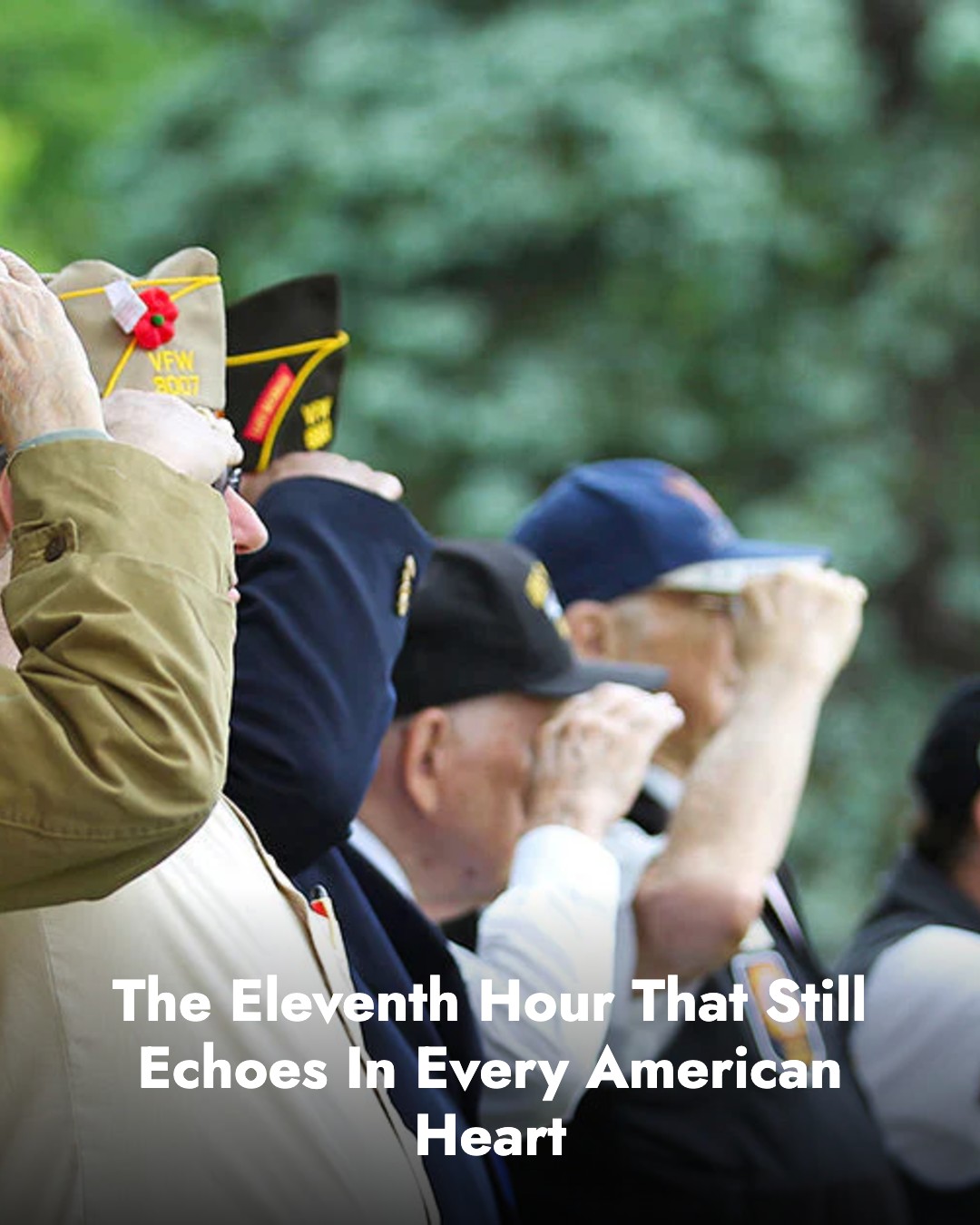
Veterans salute in a ceremony, honoring service and sacrifice, with an American flag in view.
The date marks the World War I armistice signed in 1918.
What the Day Honors—and What It Doesn’t
Veterans Day thanks all who served honorably in the U.S. Armed Forces—living or deceased—with special emphasis on those among us today. Memorial Day is different; it honors those who died in service.
How America—and Allies—Observe
At the national level, the president or a representative lays a wreath at the Tomb of the Unknown Soldier in Arlington National Cemetery. Local observances range from flag-raisings and school programs to moments of silence. Other nations pause on or near November 11 as well; Canada marks Remembrance Day and the U.K. observes Remembrance Sunday, HISTORY reports. One campus guide even encouraged a two-minute silence at 2:11 p.m. Eastern on November 11, 2023, to invite broader participation, notes Schiller International University.
Military personnel saluting in front of a waving American flag against a blue sky.
President Woodrow Wilson proclaimed the first Armistice Day in 1919.
A Living Commitment
The day’s meaning is practical as well as ceremonial. It is a reminder to thank veterans directly, learn their stories, and support their transition home.
“Going beyond the traditional ‘thank you’ can add more meaning,” say veterans quoted by Wounded Warrior Project. It is also a chance to display the flag properly, attend community events, or volunteer—simple steps outlined by the Almanac.
However you observe, the point remains the same: keep November 11 anchored to its history and to the people who wore the uniform, as the VA stresses.
A soldier walks hand-in-hand with two children in a grassy park.
Congress made November 11 a legal holiday in 1938.
Why the Date Endures
Veterans Day was built on a cease-fire that promised peace. It evolved to recognize the service of every generation. And it stays on November 11 so we remember why it began. That continuity—protected in law and honored in practice—keeps faith with those who served.