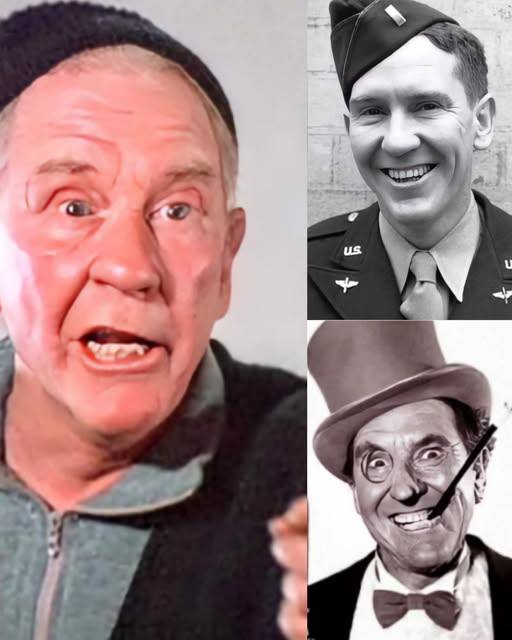
Burgess Meredith was 32 when he made a choice that would forever define both his life and legacy. Born in Cleveland, Ohio, Meredith had already carved a name for himself on stage and screen. He was a man whose talent and ambition promised a bright future in Hollywood. Yet in 1942, with the world at war, he put it all on hold and filled out his draft card, stepping forward to serve his country in a moment when duty called louder than personal ambition.
Less than a year later, on February 27, 1942, Burgess Meredith enlisted in the Army Air Forces, First Air Force. At an age when many actors are focused solely on career milestones, Meredith embraced a different kind of mission. The discipline, rigor, and danger of military life awaited him, and he would rise to the rank of Captain, demonstrating a commitment and courage that mirrored the very heroes he would later portray on screen.
Meredith’s service extended beyond the cockpit or battlefield. According to the Veterans Association’s biography in April 2022, he transferred to the Office of War Information, producing training films for the United States military. His work was not glamorous, yet it was vital—shaping, educating, and preparing troops for the immense challenges they would face abroad. Every frame of film he touched carried lessons, guidance, and a touch of Meredith’s own artistry.
In 1945, as the war drew to a close, Meredith was discharged to return to Hollywood and star in The Story of G.I. Joe. Here, he portrayed the legendary war correspondent Ernie Pyle, a man who had become a symbol of courage, empathy, and sacrifice on the frontlines of World War II. Meredith’s performance was more than an acting role; it was a tribute, an homage to the men and women he had served alongside, and a testament to the human cost of war. It bridged his life as a soldier with his vocation as an artist, allowing him to convey both authenticity and respect for those who had fought.
Even before his military service, Burgess Meredith had already achieved acclaim. His performance in the 1939 film Of Mice and Men had marked him as an actor of depth and gravitas. Yet it was after the war, as he resumed his career, that his full range would be realized. Stage, screen, and television all became arenas in which he could explore human complexity, bringing nuance and intelligence to every character. The discipline and perspective gained from his military experience undoubtedly enriched his craft.
Meredith’s post-war career was prolific. He portrayed unforgettable characters such as The Penguin in the ABC series Batman, and he appeared in popular television series including Rawhide, Bonanza, 77 Sunset Strip, Laredo, and Burke’s Law. His versatility allowed him to move seamlessly from villain to hero, from dramatic roles to comedic ones, with a presence that commanded attention. Each performance reflected a combination of skill, dedication, and the quiet confidence of a man who had seen life at its most extreme.
Recognition followed. Meredith was twice nominated for the Academy Award for Best Supporting Actor: first in 1975 for The Day of the Locust, and then in 1976 for the first Rocky film. His work in The Day of the Locust also earned him a Golden Globe nomination and a BAFTA nomination, signaling international acknowledgment of his artistry. In 1977, he won a Primetime Emmy Award for his supporting role in Tail Gunner Joe. Each accolade celebrated not just talent, but a career forged through discipline, courage, and a profound understanding of the human spirit.
Of course, many remember him most fondly as Mickey “Mighty Mick” Goldmill in the Rocky series. His portrayal of the gruff, wise trainer became iconic, resonating with audiences across generations. Meredith brought to Mickey Goldmill the same qualities that had defined his real life: perseverance, integrity, and a moral compass rooted in experience. It was a role that, perhaps more than any other, captured the essence of the man himself—a mentor, a soldier, a storyteller.
Meredith’s contributions extended to the stage as well. In 1960, he received a Special Tony Award for directing A Thurber Carnival, demonstrating that his talents were not limited to acting alone. Whether behind the camera, on stage, or in front of it, Burgess Meredith consistently displayed artistry, leadership, and vision. These were qualities undoubtedly sharpened by his military service, where precision, planning, and decisiveness are paramount.
Through all these achievements, it is important to remember that Burgess Meredith’s life was not solely defined by fame. It was defined by choices. He chose to serve when the world needed him. He chose to bring authenticity and integrity to his roles. He chose to inspire others, whether through his portrayal of a war correspondent, a fictional trainer, or the many characters who occupied the complex landscapes of his films and television appearances.
Meredith’s service in the Army Air Forces exemplified his courage, humility, and willingness to put others before himself. While many actors of his stature might have sought deferments or continued their careers uninterrupted, Meredith answered the call to service, demonstrating that heroism comes in many forms. It is not always the soldier on the frontlines, nor the medal on the chest, but sometimes the decision to serve, to risk, and to give time and talent for the greater good.
His life reminds us of the interconnectedness of duty and artistry. The lessons he learned in the Army—discipline, teamwork, facing challenges without flinching—translated seamlessly into his work as an actor and director. His portrayals of characters navigating moral dilemmas, conflict, and human frailty were imbued with authenticity, grounded in experience that few actors could claim. In many ways, his performances carried the quiet honor of service, a bridge between real-world bravery and artistic expression.
Burgess Meredith passed away on September 9, 1997, at the age of 89, leaving behind a legacy that spans military service, theater, film, and television. Lest we forget, Meredith was more than an actor; he was a soldier who understood sacrifice, a storyteller who understood humanity, and a man whose life demonstrates that true greatness arises from choices made with courage, integrity, and purpose.
Today, as we watch his performances, revisit his films, or remember the stories he helped tell, we honor not just the character on screen but the man behind it—the Captain in the Army Air Forces, the soldier who paused a flourishing career to serve, the artist who brought honesty and heart to every role. Burgess Meredith’s life is a testament to the power of service, the value of courage, and the enduring impact one individual can have, both in the world of war and in the world of art.
Through his work and his service, Burgess Meredith reminds us that heroism and artistry are not mutually exclusive. They coexist in the choices we make, the dedication we show, and the legacy we leave behind. In remembering him, we celebrate a life that inspired countless people, bridged generations, and honored the ideals of courage, commitment, and creativity.
Burgess Meredith’s story is a reminder to all of us: true heroism is often quiet, sometimes unseen, and often intertwined with a dedication to others that transcends personal ambition. From the battlefields of the Army Air Forces to the stages of Broadway, from the streets of Cleveland to the soundstages of Hollywood, Meredith’s life was a testament to service, talent, and integrity.
May we all carry forward the lessons of his life: to answer the call when duty calls, to pursue our craft with honesty and heart, and to never forget that courage and dedication—whether on the battlefield or in the arts—can leave a lasting legacy.
Captain Burgess Meredith will forever remain a symbol of bravery, talent, and unwavering commitment to something greater than oneself. Lest we forget.
A Salute to Betty White: Remembering Our National Treasure on the Anniversary of Her Passing.3986
Lest We Forget.
When Betty White passed away on December 31, 2021, just days shy of her 100th birthday, the nation mourned a beloved entertainer. We remembered the quick wit, the impeccable timing, the warmth that leapt from the screen across generations. But on this anniversary of her passing, it is worth pausing to remember another Betty White—one less often discussed, yet deeply meaningful: a young American woman who stepped forward during World War II to serve her country, quietly and without expectation of applause.