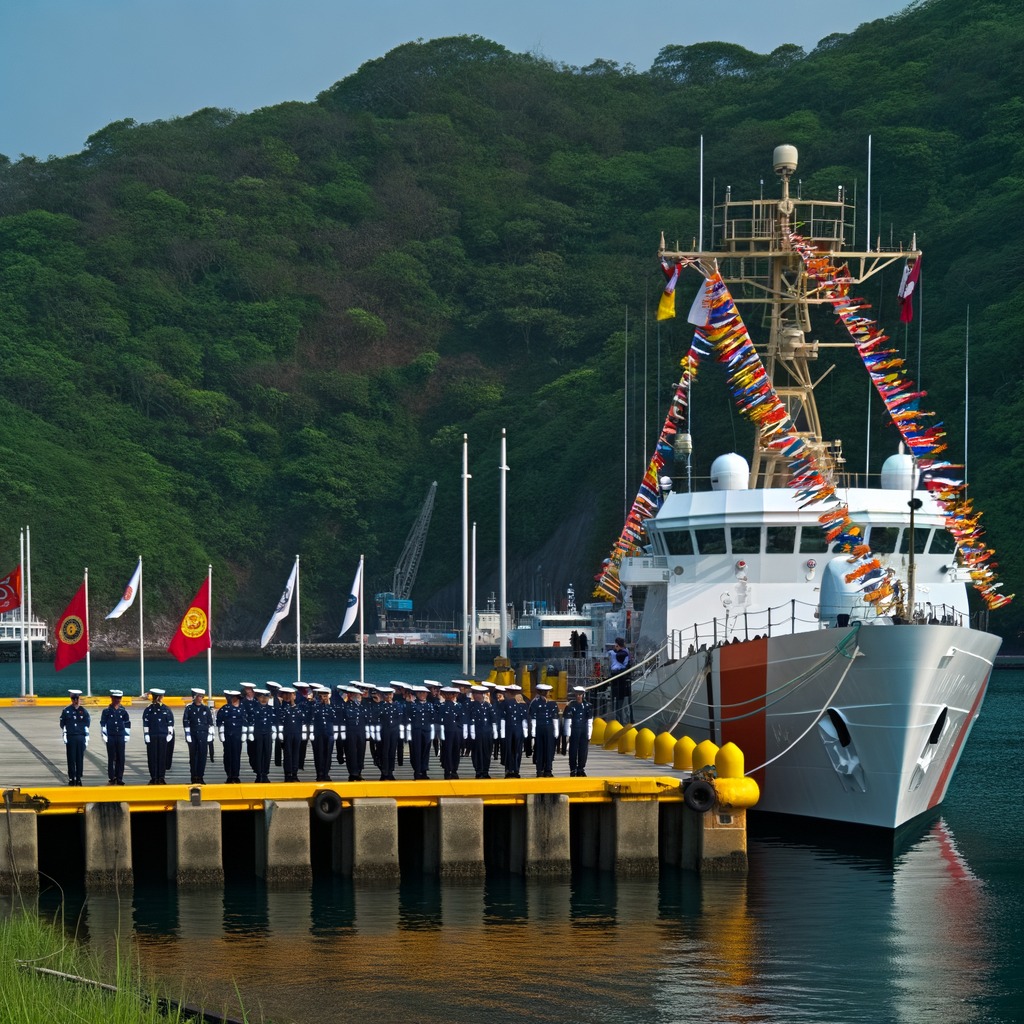
The U.S. Coast Guard recently commissioned its newest Fast Response Cutter (FRC), the USCGC Earl Cunningham (WPC 1159), during a formal ceremony in Kodiak, Alaska. This milestone marks a significant addition to the Coast Guard’s operational fleet and strengthens its presence across the maritime regions of Alaska. Named in honor of a decorated Army and Coast Guard veteran, the cutter reflects both a legacy of heroism and a commitment to modern maritime security. For those following Coast Guard fleet developments or interested in military heroism, the story behind this vessel is both inspiring and poignant.
Modern apartment living room with stylish decor and natural light
The commissioning ceremony, held on August 11, 2025, was presided over by Adm. Kevin Lunday, acting commandant of the Coast Guard. Members of the Cunningham family attended, including Penney Helmer, granddaughter of the cutter’s namesake and the vessel’s official sponsor. Adm. Lunday emphasized the strategic importance of the new cutter, stating that it enhances the Coast Guard’s ability to control and defend Alaska’s maritime borders, protect vital resources, and respond to emergencies across the Aleutian Islands and surrounding waters.
The USCGC Earl Cunningham is the 59th vessel in the Fast Response Cutter series and the second of three FRCs that will be based at Coast Guard Base Kodiak. Designed for multi-mission capabilities, the cutter will serve in the Aleutian Islands, Bering Sea, Gulf of Alaska, and North Pacific Ocean. Its primary missions include search and rescue, fishery patrols, drug and migrant interdiction, national defense, and coastal security. These capabilities make it a critical asset in a region known for challenging weather and vast maritime territory.
The vessel’s namesake, Petty Officer Earl Cunningham, lived a life marked by service and sacrifice. Before joining the Coast Guard in 1928, Cunningham served in the U.S. Army during World War I, where he fought in the trenches of France and left the service as a corporal. His transition from Army to Coast Guard reflects a lifelong dedication to public service and national defense.
One of the most compelling aspects of Cunningham’s story is the rescue attempt that ultimately cost him his life. On February 8, 1936, while stationed on the shores of Lake Michigan, Cunningham volunteered to rescue two ice fishermen who had fallen into the freezing water. Braving extreme conditions, he reached them using a skiff and successfully pulled them aboard. However, worsening weather made the return journey impossible. Three days later, one of the fishermen managed to walk nine miles across the ice to safety. The other perished trying to do the same. Cunningham was later found frozen in place, still holding the oars of his skiff. His selfless act earned him a posthumous Gold Life Saving Medal, one of the highest honors for maritime bravery.
I found this detail striking—not only for its emotional weight but also for what it reveals about the values the Coast Guard honors. Naming a cutter after Cunningham ensures that future generations of service members remember his courage and devotion to duty. It’s a powerful example of how individual acts of bravery can resonate across decades and continue to inspire.
The commissioning of the USCGC Earl Cunningham also highlights the Coast Guard’s broader modernization efforts. The FRC program is designed to replace the aging Island-class 110-foot patrol boats that have served since the 1980s. These new cutters are equipped with advanced navigation and communication systems, offering greater speed, endurance, and mission versatility. The program has received substantial funding, including nearly $1 billion allocated for additional FRCs under a legislative package described as the largest single funding commitment in Coast Guard history.
Strategic investments in maritime infrastructure are particularly important in regions like Alaska, where vast distances and harsh conditions demand robust and reliable assets. The addition of the Earl Cunningham to the Kodiak fleet enhances the Coast Guard’s ability to perform critical operations across some of the most remote and environmentally sensitive waters under U.S. jurisdiction.
Equally important is the symbolic value of the cutter’s name. In honoring a man who served in both the Army and the Coast Guard, the vessel embodies a spirit of inter-service dedication and sacrifice. It also serves as a reminder that heroism often comes from ordinary individuals placed in extraordinary circumstances. Cunningham’s story, though rooted in a specific moment in history, continues to offer lessons in courage, resilience, and commitment to others.
As the USCGC Earl Cunningham begins its service, it carries not only state-of-the-art capabilities but also a legacy of bravery that will guide its crew in the challenging missions ahead. In the words of Adm. Lunday, the vessel and its personnel will “honor the heroic legacy and selfless devotion to duty exemplified by Petty Officer Cunningham in the years ahead.”
For those interested in Coast Guard news, maritime security, and stories of military heroism, the commissioning of this cutter is a moment worth noting. It reflects the ongoing evolution of the Coast Guard’s operational capacity and the enduring importance of honoring those who gave everything in service to their country.